
🧭 Introduction: Good Design Is Rarely Noticed
When UI/UX design works well, users do not talk about it. They simply move forward, complete tasks, and trust the product.
When it fails, users often leave—without complaints, feedback, or second chances.
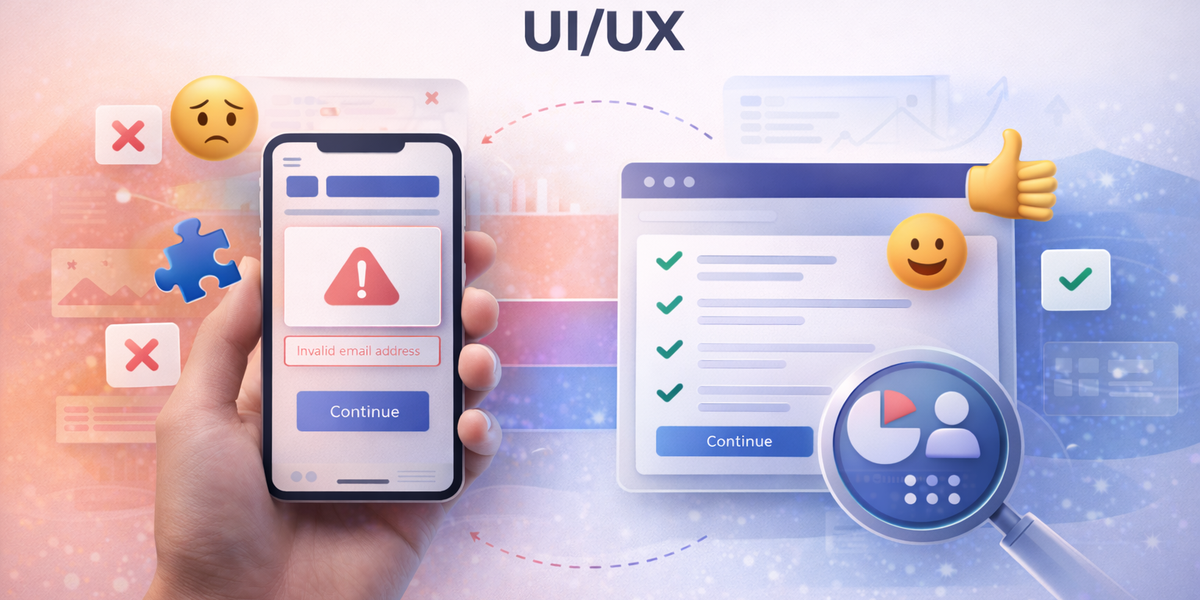
This is the most dangerous aspect of poor UI/UX design: it fails silently ⚠️
In an era where users have unlimited alternatives, even small design friction can lead to lost engagement, conversions, and credibility. This article explores why most UI/UX problems go unnoticed, how they impact products, and what modern design teams must rethink.
🎭 The Myth of “Looks Good” Design
Many teams equate good UI/UX with visual appeal. While aesthetics matter, design is primarily about behaviour, clarity, and usability.
A product can look modern and still:
- Confuse users 😕
- Slow down decision-making ⏳
- Create cognitive overload 🧠
- Reduce trust 🔒
Good design is not what users admire—it is what they do not struggle with.
🔍 Where UI/UX Fails Without Warning
1. 🧩 Friction Hidden Inside Simple Flows
Small design decisions—extra clicks, unclear labels, or inconsistent layouts—compound into frustration. Users may not consciously identify the problem, but they feel it.
Over time, this friction leads to:
- Lower engagement 📉
- Abandoned workflows 🚪
- Reduced retention 🔁
2. 🏢 Designing for Stakeholders Instead of Users
Many interfaces are optimized to satisfy internal opinions rather than real user behavior. Features are added not because users need them, but because they are requested internally.
This results in:
- Cluttered interfaces 🧱
- Poor visual hierarchy
- Confusing user journeys
3. ♿ Ignoring Accessibility and Inclusivity
Poor contrast, small text, and complex interactions do not just affect edge cases. They affect a wide range of users across devices, environments, and abilities.
Accessibility is not optional—it is foundational to good UX 🌍
🗣️ Why Users Rarely Give Feedback
Users rarely explain why they leave. They simply:
- Close the tab ❌
- Uninstall the app 📱
- Choose a competitor 🔄
This makes UI/UX problems difficult to detect unless teams actively observe user behaviour through testing, analytics, and research 📊
💼 The Business Impact of Poor UI/UX Design
UI/UX is often treated as a design concern, but its impact is deeply tied to business outcomes.
Poor UI/UX leads to:
- Lower conversion rates 💸
- Increased support costs 🧾
- Reduced customer trust 🤝
- Slower product adoption 🐌
Conversely, strong UI/UX improves efficiency, satisfaction, and long-term loyalty.
🔄 Rethinking UI/UX Design for Modern Products
1. 🧠 Design for Clarity, Not Creativity
Creativity should support usability, not compete with it. Clear navigation, predictable patterns, and familiar interactions outperform experimental design in most real-world scenarios.
2. 🔬 Make User Research Non-Negotiable
Assumptions are expensive. Usability testing, interviews, and behavioral data reveal issues that internal teams often overlook.
Design decisions should be validated, not guessed ✅
3. 🔁 Treat UX as a Continuous Process
UI/UX is not a one-time deliverable. User needs evolve, products grow, and contexts change. Continuous iteration is essential.
4. 📐 Measure Experience, Not Just Output
Success metrics should go beyond clicks and page views. Time to task completion, error rates, and user confidence provide deeper insight into real experience.
🚀 The Future of UI/UX: Invisible, Ethical, and Intentional
The best UI/UX design is increasingly:
- Invisible to users 👀
- Focused on reducing effort ⚡
- Respectful of attention and privacy 🔐
As products become more complex, simplicity will become the strongest competitive advantage.
🏁 Conclusion: If Users Notice Your Design, Something Is Wrong
Great UI/UX design does not demand attention—it removes obstacles.
The most successful products are not those with the boldest visuals, but those that quietly guide users toward their goals with minimal effort and maximum clarity.
In UI/UX, silence is success 🤍