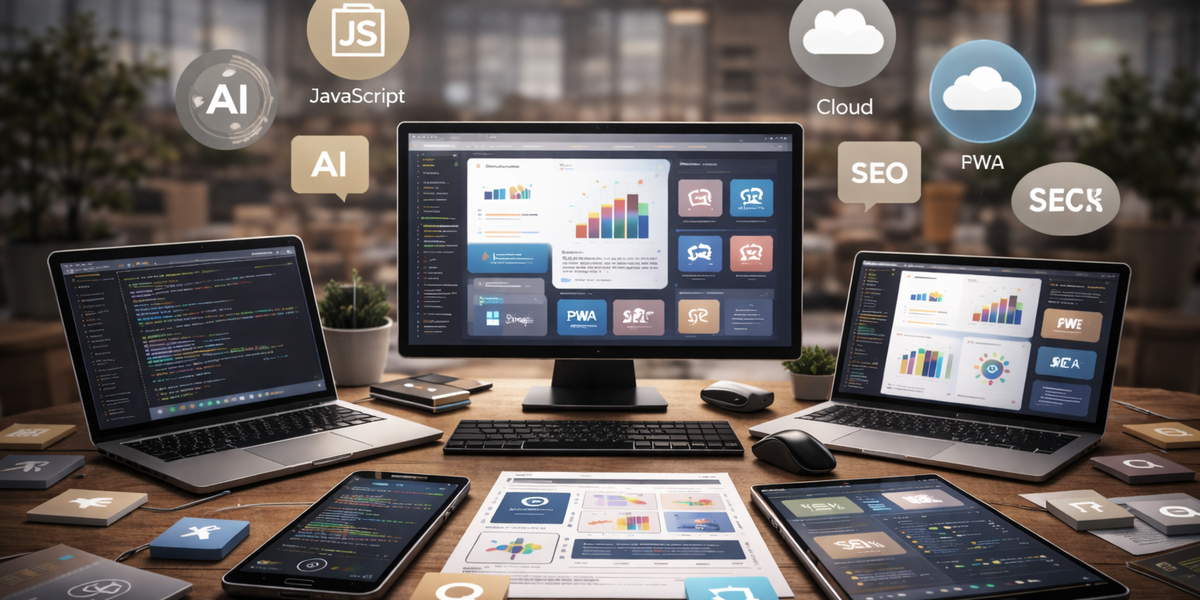
Top 5 Web Development Trends in India for 2025
Description:
Discover the key technologies shaping modern websites in 2025, from PWAs to AI-powered solutions. This blog helps Indian businesses stay competitive with faster, smarter, and scalable web development trends.
Introduction:
The digital landscape is evolving faster than ever, and keeping up with web development trends is essential for businesses that want to stay ahead. In India, startups and enterprises alike are embracing new technologies to provide better user experiences, faster performance, and smarter solutions. In 2025, these trends are shaping how websites are built, maintained, and experienced by users. Here’s a detailed look at the top 5 web development trends that Indian businesses should watch out for.
1. Progressive Web Apps (PWAs)
- PWAs combine the best of web and mobile apps. They work offline, load quickly, and offer app-like experiences without requiring users to download anything from the app store.
- PWAs are becoming the go-to solution for businesses looking to engage users efficiently.
Key Advantages:
- Offline Mode: Users can access content even without an internet connection.
- Faster Load Times: PWAs use caching and efficient code to improve speed.
- Lower Development Costs: One PWA works on both desktop and mobile.
- Push Notifications: Businesses can send personalised updates to engage users.
Why it matters:
- Faster loading times, better engagement, and cost-effective development.
Example:
- Flipkart’s PWA significantly reduced bounce rates and increased conversions compared to its traditional website, showing the power of PWAs in e-commerce.
Implementation Tip:
- Focus on caching strategies, responsive design, and minimalistic UI to maximise the PWA experience
2. AI-Powered Web Solutions
- Artificial intelligence is no longer futuristic—it’s here. From chatbots and recommendation engines to predictive analytics, AI helps websites provide personalised experiences and automate tasks.
- Businesses using AI see higher customer satisfaction and improved efficiency.
Applications in Web Development:
- Chatbots & Virtual Assistants: Provide instant customer support.
- Recommendation Engines: Suggest products, content, or services based on user behaviour
- Predictive Analytics: Anticipate user needs and improve engagement.
Why it matters:
- Personalised interactions and smarter automation give businesses a competitive edge.
Example:
- Amazon and Myntra use AI to recommend products based on browsing patterns, enhancing conversions and user satisfaction.
Implementation Tip:
- Start small with AI chatbots or recommendation widgets, then gradually expand AI functionality as you gather user data.
3. Serverless Architecture
- Serverless computing allows developers to focus on building applications without worrying about managing servers. Cloud providers handle the backend, automatically scaling resources based on demand.
Benefits for Businesses:
- Cost Efficiency: Pay only for the resources you use.
- Automatic Scaling: Handles traffic spikes without manual intervention.
- Faster Deployment: Focus on coding without worrying about infrastructure
Why it matters:
- Reduced costs, automatic scaling, and faster deployment make serverless architecture ideal for startups and growing businesses.
Example:
- Startups using AWS Lambda or Azure Functions can launch scalable web apps without investing in expensive servers.
Implementation Tip:
- Identify functions that can run independently, such as user authentication or image processing, and migrate them to a serverless architecture.
4. Mobile-First & Responsive Design
- With more than half of web traffic coming from mobile devices, designing for mobile first is no longer optional. Responsive websites that adjust seamlessly across devices improve user experience and search engine rankings.
Key Strategies:
- Responsive Layouts: Automatically adjust to different screen sizes.
- Optimised Images: Reduce load times and improve performance.
- Touch-Friendly UI: Buttons and navigation optimised for touchscreens.
Why it matters:
- Better user engagement, improved SEO, and wider audience reach.
Example:
- Swiggy and Zomato prioritise mobile-first design to improve order completion rates and customer satisfaction.
Implementation Tip:
- Use tools like Google Lighthouse to test mobile performance and make continuous improvements.
5. Low-Code & No-Code Platforms
- These platforms allow businesses to build applications quickly without extensive coding knowledge.
- They’re ideal for startups and small businesses looking to launch digital solutions faster and cost-effectively.
Benefits:
- Rapid Prototyping: Test ideas quickly without full-scale development.
- Reduced Costs: Less reliance on expensive development resources.
- Accessibility: Non-technical teams can contribute to app development.
Why it matters:
- Speeds up development, reduces costs, and empowers non-technical users to innovate.
Example:
- Platforms like Bubble and Adalo allow startups to create complex apps in weeks rather than months.
Implementation Tip:
- Use low-code tools for internal tools or MVPs, then transition to full custom development as your product scales.
Conclusion:
- The web development landscape in India is undergoing rapid transformation, and staying ahead requires innovation and adaptability. At Codetailor Softech Pvt. Ltd., we specialise in building modern, high-performance websites using the latest technologies—whether it’s Progressive Web Apps, AI integration, serverless solutions, or responsive designs.
- Our goal is to help startups and enterprises turn these trends into real business advantages through efficient, scalable, and user-centric digital solutions.