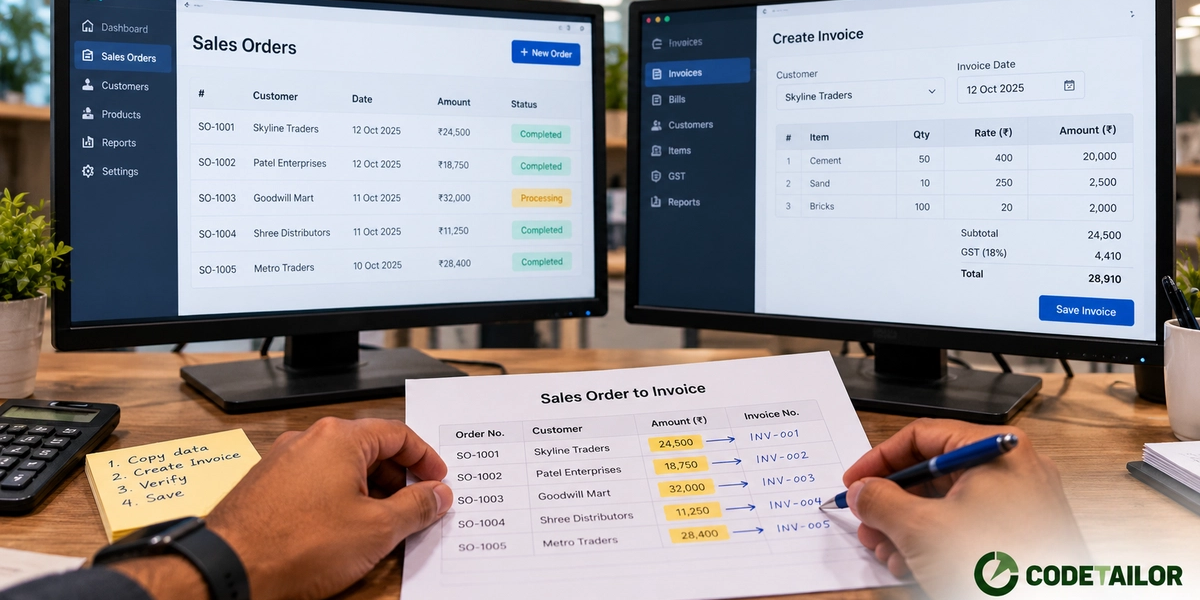
The printed sheet between two screens
Walk through most Indian SMBs and you find the same object: a printed sheet, or a WhatsApp message, or a spreadsheet, sitting between two systems that both hold the same information and neither of which knows about the other.
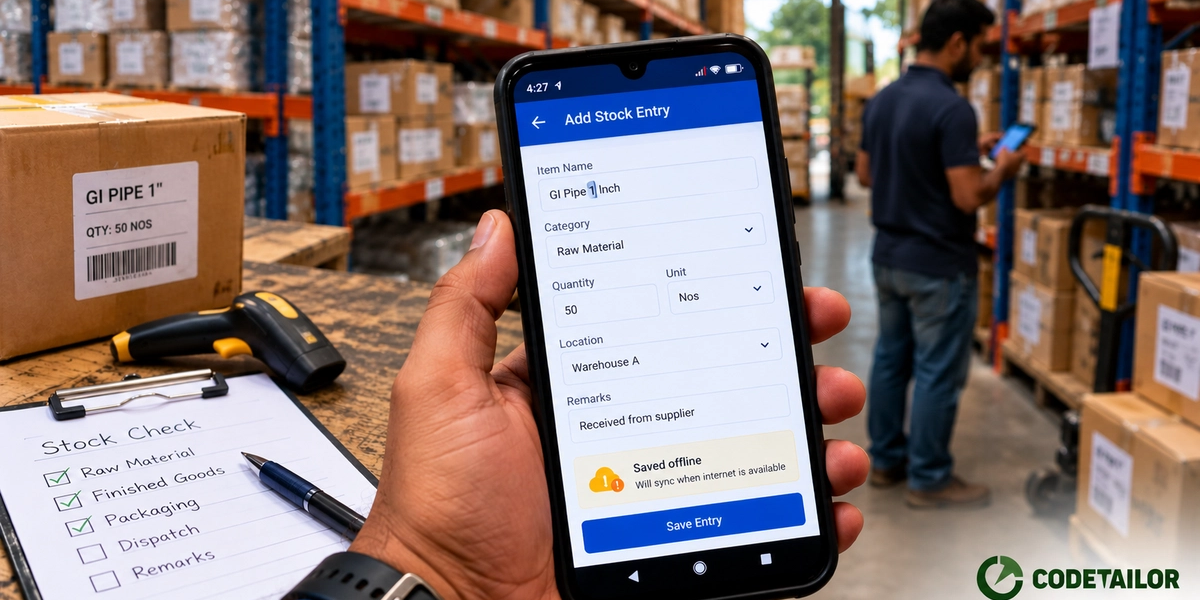
The website takes an order. Someone prints it. Someone else types it into the ERP. Later, someone copies the dispatch status back so a customer can be told.
Each step is small. Together they are a permanent staffing cost, a permanent source of errors, and the reason nobody trusts either system fully.
An API is how that sheet goes away.
What an API actually is
Skip the acronym. An API is a defined way for one system to ask another for something, or tell it something, without a person in between.
You already rely on dozens. When a courier's tracking status appears inside a shop's website, that is an API. When a payment gateway tells your system a payment succeeded, that is an API. When your accountant's software pulls bank statements, same thing.
Two properties make them different from a person retyping:
- They are defined. Both sides agree on the shape of the data, so it does not depend on someone reading a figure correctly.
- They are repeatable. Once, or every five minutes, or every time something happens — at no additional cost per repetition.
The three questions worth asking
You do not need to understand how an integration is built. You need to know when one is worth building.
1. Is the same information being entered twice?
The clearest signal. If a number exists in system A and a person puts it into system B, that is an integration waiting to happen. It removes the labour and — more valuable — removes the possibility of the two copies disagreeing.
2. Are decisions being made on stale information?
The website shows stock that was accurate this morning. A salesperson quotes a price from a list that changed last week. If the delay between something changing and the rest of the business knowing is causing real mistakes, connecting the systems is the fix.
3. Is someone's job mostly moving data?
If a substantial part of a role is taking information out of one system and putting it into another, that is the business paying a salary for something a connection does continuously.
Where it pays off in practice
- Website to operations. Orders arriving as orders, not as emails to retype. Stock levels that reflect the godown. Dispatch status visible to the customer without anyone being asked.
- Billing to accounts. Invoices reaching the accounting system without re-entry — the single most common integration in Indian SMBs, and usually the first one worth doing.
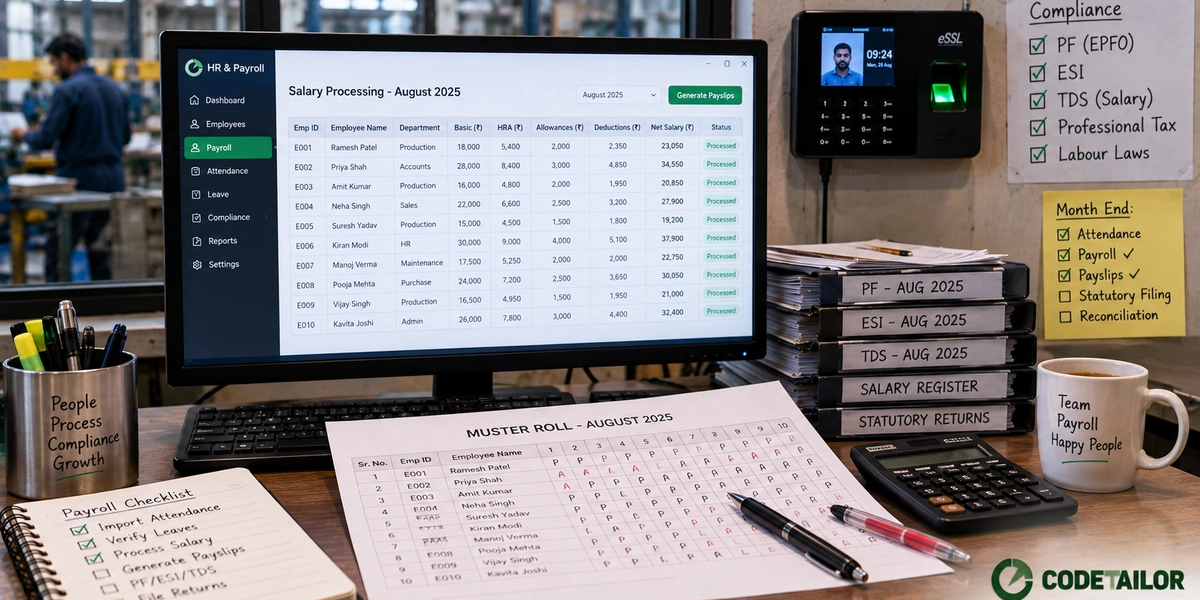
- Attendance to payroll. Removes the largest source of payroll error, which is retyped attendance data.
- CRM to quotations. An enquiry becoming a quotation becoming a job, carrying its details forward instead of being re-entered at each stage.
- Anything with a courier, a bank or a gateway. These almost always have good APIs already, and the manual alternative is somebody checking a portal.
"API-first" as a purchasing rule
The phrase describes a design approach, but for a business owner it is most useful as a buying rule:
Before choosing any new system, ask what it can exchange with other systems, and how.
A product that cannot share its data will eventually become an island, and islands need boats — people, moving information by hand, forever. That cost does not appear in the licence fee and it does not go away.
It is also worth raising before the build, not after: it is a property of the backend stack you pick, not something bolted on later.
It applies to custom software too. Anything built for you should expose its data in a defined way from the beginning, even if nothing consumes it yet. Adding that later means changing something that is already live, which is more expensive and more disruptive than including it at the start.
This is also the reason the custom-versus-packaged ERP question is less binary than it looks. If systems can exchange data, you can keep the packaged one where it is strong and build only the piece that is genuinely yours.
Where integrations actually go wrong
Not in connecting the two systems. That part is usually smaller than expected.
- When one side is down. Networks fail, vendors have maintenance windows. What should happen to data that could not be delivered? If the answer is "it is lost", the integration is worse than the person it replaced.
- When something arrives twice. A retry after a timeout can deliver the same order twice. Systems that do not guard against this create duplicate records, and duplicate records in stock or accounts are painful to unpick.
- When the two sides disagree. The same customer edited in both systems. Which wins? This has to be decided by a human, before it happens, once — not by a developer, in a hurry, when it does.
- When it fails silently. The worst outcome. Data stops flowing and nobody notices for a week, because the failure state looks like a quiet day. Any integration worth building needs someone to be told when it stops.
These are the questions to ask whoever builds it. The connection is straightforward; the failure handling is the work.
What to do next
Look for the printed sheet. Every place in your business where information moves between systems by hand is a candidate, and the list is usually shorter and more specific than "we need to integrate our systems".
Then check what your existing software already offers — many products have an API nobody has used.
Tell us which two systems are not talking and we will tell you whether the connection already exists. More on API development and integration.